Every family investing in a college recruiting service like NCSA College Recruiting by IMG Academy asks the same question: does this actually work? And do you need it to get recruited to play your sport in college?
Here’s some statistics to know: NCSA by IMG Academy has helped more than 360,000 student-athletes get recruited to play their sport in college in our 25-year history. And we’re part of a bigger story: IMG Academy sent over 40,000 across all our brands to play their sport in college in 2026 alone. “It’s been one of the best things I’ve ever paid for,” said one father of a baseball student-athlete who committed to a Division I school.
NCSA by IMG Academy has helped student-athletes win their future by:
- Find their best fit across NCAA division levels, junior college and NAIA
- Navigate conversations with college coaches
- Understand the quickly changing world of college sports including NIL and the transfer portal
But we know that when families are looking for a service that is so impactful to their student-athlete’s future, statistics alone won’t answer the question they have: Will this work for me?
“I always say: all we can guarantee is the best shot possible,” said April Hall, vice president of recruiting at NCSA by IMG Academy. “You’re better with us than without us.”
This article breaks down what the numbers mean, what to watch out for, and what actually moves the needle for families going through this process.
Key takeaways
- Success in college recruiting means something different for every family
- Metrics that families should look for include support of a student-athlete’s needs
- NCSA’s track record in recruiting includes more than 360,000 student-athletes who committed to play their sport at the next level, and annually supports close to 30,000 student-athletes being placed in college annually
- NCSA can help you with exposure to coaches, organization and the right tools during the recruiting process
- Athletes who stay organized, use their NCSA recruiting profile and reach out to coaches are more likely to be successful in the recruiting process
What “success” means in college recruiting
Most families assume success means a scholarship offer. But playing at the college level isn’t that simple. Positive recruiting outcomes exist on a spectrum: a signed financial aid agreement, a roster spot, staying on that roster, and eventually earning a degree.
Each of these is a different milestone. Many families focus first on offers, but retention and degree completion are often more indicative of long-term success, and the most meaningful milestones tend to be the ones families least expect to matter early in the process.
A verbal offer from a coach is real and encouraging, but it is nonbinding. Following the NCAA’s elimination of the National Letter of Intent for Division I programs in October 2024, a signed written offer of athletic aid now serves as the formal commitment document for DI recruits.
A verbal offer can be retracted; an official aid agreement usually cannot. Recruiting services that highlight “offers received” without distinguishing verbal from official commitments are measuring something real but incomplete. The real question to ask is how many families the recruiting service helped find the right next step for their student-athlete – and how supported did they feel making that choice along the way.
At NCSA, that number is around 30,000 per year. A service like NCSA can also help student-athletes and their families feel more confident and stay organized in the recruiting process.
An athlete who enrolls and transfers within a semester didn’t really find success. The services and families that track retention and degree completion are measuring recruiting outcomes the right way, and that’s the standard NCSA explicitly applies when defining long-term success.
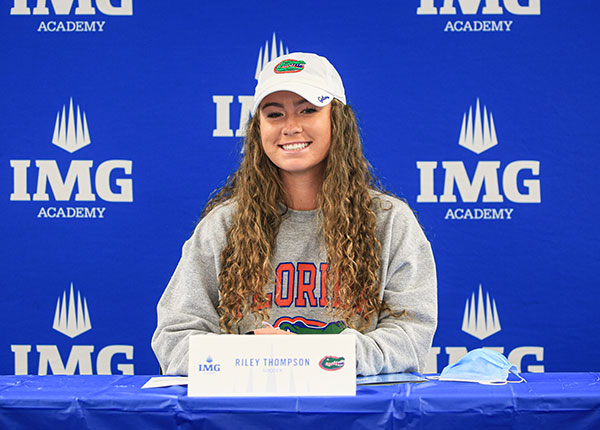
Families who felt supported through their recruiting journey and used NCSA to help find the right fit for their family, like the athlete’s story below, are the best measure of success.
See more NCSA success stories.
The metrics families should use to evaluate any recruiting service
A placement rate sounds simple, but the definition matters enormously. Does “placed” mean the student-athlete enrolled at a school with a sports program? Been officially offered an athletic scholarship? Made an active roster? Found the right place for your academics and athletics?
“Choosing a recruiting service requires alignment. Each family and prospective student-athlete has unique goals & support needs. In my experience, recruitment education, honest evaluations, and personalization are critical to a successful recruiting journey in finding a home at the next level. Recruiting services are not created equal and no one can offer a quick solution. If they do, run,” said longtime NCSA Recruiting Coach Heather Evans.
Numbers don’t capture everything. Whether the student-athlete felt the program matched their academic and athletic goals is a qualitative dimension that recruiting families often overlook. Consider a scenario where placement rates look strong, but student-athletes routinely transfer after one year because the program was a poor personal fit, that outcome doesn’t show up in a headline statistic.
Third-party reviews, parent testimonials, and sport-specific success stories give context that placement rates can’t. When evaluating a recruiting service, look for evidence of long-term fit, not just initial placement.
NCSA’s track record in college recruiting
NCSA is the world’s largest recruiting network and has placed over 360,000 athletes in college programs It has an active network of more than 50,000 college coaches actively using the platform to recruit. That scale creates a real feedback loop: coaches actively use the platform to find athletes, which means an NCSA profile reaches decision-makers rather than sitting unseen in a generic database.
For context, approximately 7% of all high school athletes make any college roster (the number can be slightly higher or lower depending on the sport). NCSA’s reported placement rate for its members is substantially higher, though part of that gap reflects the fact that athletes who actively seek recruiting help tend to be more motivated and prepared than the general high school athlete population. But one in four college roster spots are filled with student-athletes who had an NCSA profile.
What actually drives your athlete’s recruiting outcome
No recruiting platform changes what a student-athlete does on the field. College coaches evaluate verified performance data: measurable stats, film, and competition level. A student-athlete with strong, verifiable data will generate coach interest regardless of which platform they use.
Where the NCSA recruiting platform adds value is in making that data visible and accessible to the right coaches at the right programs. Student-athletes who present inconsistent or unverifiable stats struggle regardless of how many coaches see their profile.
Timing relative to your graduation year and division target shapes every interaction. DI programs recruit earlier and fill rosters faster. DIII and NAIA programs often recruit well into senior year. A student-athlete who starts proactive outreach in sophomore year and targets programs realistically for their division has a fundamentally different outcome trajectory than a senior searching for a last-minute spot.
NCSA’s direct messaging system lets student-athletes contact any coach in the network and track when they open the message, removing the guesswork from outreach and showing exactly who to follow up with.
“The student-athletes who succeed fastest are those who target programs realistically and reach out directly,” said Aubrey Sands, longtime recruiting coach and former DI college volleyball player. Passive profile hosting alone is unlikely to produce the best results; proactive outreach is where momentum builds. NCSA’s College Match tool uses performance data, academic credentials, and division preferences to identify realistic fits.
Student-athletes who send targeted, personalized messages to a focused list of realistic programs consistently outperform those who set up a profile and wait. A short, specific message referencing the school’s program, the student-athlete’s stats, and graduation year is far more effective than a generic mass-email approach.
The thing that makes NCSA stand out the most, though, is its people. NCSA has more than 1,000 recruiting experts – many who played their sport in college or coached at the college level – available to help at every step of the way. Across all of IMG Academy, there are more than 2,000 experts – including those who can help with mental performance and nutrition coaching for student-athletes looking for guidance to become the most recruitable athlete possible.
Learn more about our recruiting experts here.
Sport-specific context that changes the math
The path to a roster spot varies significantly by sport. Nationally, about 7% of high school football and baseball players reach a college roster at any division, compared to roughly 3% to 4% for basketball players.
DI access is even narrower: approximately 2% of high school baseball players reach a DI roster, and similar ratios apply across most team sports. These percentages are not a ceiling for NCSA student-athletes. They’re a baseline for understanding why proactive, targeted outreach matters so much.
Scholarship amounts also vary dramatically by sport, school, division level and scholarship type. Knowing your sport’s scholarship structure before evaluating recruiting outcomes tells you what a genuinely good result looks like in your specific context. Understanding the changing landscape of college recruiting also matters – the explosion of activity in the transfer portal has changed college recruiting at every level. Having a knowledgeable expert at your side like a NCSA recruiting coach can make it easier to navigate the changes and find the right coaches and programs for you.
Division level also determines how much time you have. DIII and NAIA programs often recruit later and keep spots open longer. A junior or senior who has been overlooked at the DI level can still find a strong fit at DII, DIII, or NAIA with the right outreach strategy and realistic targeting. NCSA’s coach network spans all division levels (including NAIA and junior college), which means the same profile and messaging tools apply regardless of which division ends up being the right fit.
Practical steps to raise your recruiting outcomes
A recruiting profile with missing stats, outdated film, or vague academic information gets ignored. Every field matters. NCSA’s free athlete profile is structured specifically for coach evaluation, covering sport-specific stats, academic GPA and test scores, and a highlight reel. NCSA profiles get about 5 million views per year from college coaches looking for the right person to fit their program.
Student-athletes who complete every section and update their profile regularly tend to receive more coach engagement than those with half-finished profiles. Think of it as your first impression with every coach in the network simultaneously. More than ever, if you ever look for something, the first place you’re going is online,” said David Kmiecik, NCSA recruiting expert. “For college coaches, in a lot of ways, it’s the same sort of process. They want to be able to look at student-athletes’ information. They want to make sure it’s accurate, it’s updated, it’s easy to evaluate.”
Proactive outreach separates student-athletes who get placed from those who wait. Use NCSA’s direct messaging system to contact coaches at programs that match your division target, preferred location, and academic profile. Track who opens your messages and who views your profile. Follow up with those coaches within a week.
That sequence, repeated across a focused, realistic list of programs, creates momentum that passive profile-hosting never does. Note that message tracking shows opens, but coach response rates vary and follow-up remains essential.
For student-athletes serious about finding the best fit rather than just any fit, working with one of NCSA’s recruiting coaches provides more personalized support throughout the process. These coaches are former college athletes who understand recruiting from the other side of the conversation. They help student-athletes build a realistic school list, craft outreach messages, interpret coach feedback, and stay on timeline relative to the NCAA recruiting calendar.
The most common and costly mistakes families make in recruiting happen when they go it alone without understanding division-specific rules, contact periods, and what coaches actually need to see before extending an offer.
Setting honest expectations before you commit
The NCSA success rate is not a single number you can look up in a table. Success means different things at different stages, and outcomes depend heavily on what the student-athlete brings to the process and how actively the family uses the tools available.
What NCSA College Recruiting provides is the infrastructure: a network of 50,000+ coaches, over 360,000 placements as proof of concept, and direct outreach tools that make connections happen faster than doing it alone. Each year, coaches conduct more than 6.5 million searches on the NCSA platform. Participating with an active and updated profile gives student-athletes the best chance to stand out.
Families who go in with clear goals, realistic division targets, and a proactive mindset consistently get better results than those who treat a recruiting service as a hands-off solution. Define what success looks like for your student-athlete first: a DI scholarship, a DIII academic fit, or a roster spot that funds a meaningful college experience. Then build the strategy around that target, using the tools and coaching that NCSA puts in your hands to make it happen.
If you’re ready to build your student-athlete’s profile and start connecting with college coaches directly, start here.
Or reach out to the team at NCSA to find out which resources fit where your student-athlete is in the process right now.
Frequently asked questions
Does NCSA guarantee a scholarship?
NCSA does not guarantee a scholarship – no recruiting service should or can! NCSA by IMG Academy provides tools and guidance to help student-athletes and their families feel more confident, organized and supported in the college recruiting process.
How does NCSA measure success?
NCSA measures success by several metrics including commitments each year and number of student-athletes that we helped through the recruiting process, the number of times a coach messaged an athlete, athlete profile views and more. We also measure customer satisfaction for coaches and student-athletes who use NCSA.