
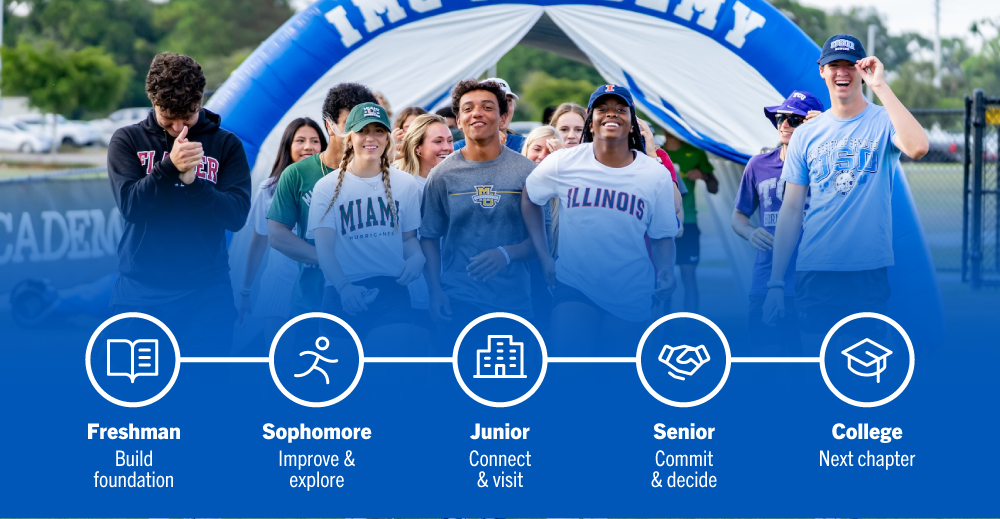
Most families think college recruiting starts junior year, but the strongest timelines begin much earlier. Student-athletes who enter senior year with options often started building their recruiting profile, researching programs, and collecting game film two or three years before signing day. This grade-by-grade college recruiting timeline breaks down what to focus on from 9th grade through senior year, including when to contact coaches, which eligibility benchmarks matter, and how to stay organized throughout the process. Families using NCSA College Recruiting can follow the same framework to build a coach-ready profile, track outreach, and compare college opportunities with more confidence.
Key Takeaways
- Start your college recruiting timeline in 9th grade with academics, school research, and game film.
- Contact college coaches early and build a strong recruiting profile before key contact windows open.
- Use junior year to manage coach communication, visits, and NCAA eligibility requirements.
- Spend senior year comparing offers, confirming financial aid, and completing final eligibility steps.
- Recruiting timelines vary by sport and division, so check current NCAA rules and dates.
College Recruiting Timeline by Grade, Freshman Year: Build the Foundation
College coaches won’t be calling your freshman. That’s not a discouragement; it’s a strategic reality that frees you to focus on the work that makes future outreach actually land. Everything a coach will eventually evaluate, your GPA, your course rigor, your development trajectory, your highlight reel, starts getting built right now.
Why academics are your most important recruiting tool in 9th grade
NCAA Division I programs require recruits to complete 16 approved core courses with a minimum 2.3 GPA. Division II sets that floor at 2.2. The choices a freshman makes about which classes to take directly affect those totals, and the damage from a rough 9th-grade semester takes years to repair. Registering with the NCAA Eligibility Center early, before or during freshman year, gets you into the system and ensures your course selections are being tracked correctly from the start.
This isn’t about stressing a 14-year-old with eligibility rules. It’s about making the right schedule decisions now so nothing blocks a scholarship conversation later. Talk to your school counselor about which courses qualify as NCAA-approved core courses. Most schools maintain a list; make sure you’re on the right track before sophomore year starts.
Starting your school list and division research
Freshman year is the right time for an honest, pressure-free assessment of your athletic level, academic goals, and geographic preferences. Research NCAA Division I, II, III, and NAIA options without locking anything in. Tools like NCSA’s College Search and College Match let you filter programs by division, location, academic selectivity, and more, so you can build a broad target list that reflects where you actually fit, not just where you want to fit.
Film everything from day one
Start filming games, camps, and practices in ninth grade even if the footage isn’t highlight-reel quality yet. Coaches want to see development over time, and having early film gives you material to work with when you need a polished highlight reel sophomore or junior year. A consistent filming habit costs nothing and builds an archive you’ll be glad you have.
Sophomore Year: Getting on Coaches’ Radar Before They Can Reach Out
Here’s the rule most families don’t know: athletes can contact college coaches at any time. Coaches, on the other hand, are restricted by NCAA contact windows. For most Division I sports, June 15 after sophomore year is the first date coaches can respond to direct messages, texts, and calls. Before that date, every move has to come from the athlete’s side.
When contact windows open and why waiting is the costliest mistake
Waiting for coaches to reach out is the most common mistake sophomore athletes make. Send the first email. Share the highlight reel. Introduce yourself before the window opens so that when June 15 arrives, you’re not an unknown name in a coach’s inbox; you’re a prospect they’ve already seen. Division II coaches have a bit more flexibility but still follow the June 15 threshold for off-campus contact and official visits.
Building a coach-ready recruiting profile
A complete recruiting profile includes your athletic stats, GPA, relevant test scores, a highlight video, references, and contact information for you and your family. This is what coaches use to evaluate you before they ever see you play in person. NCSA’s free athlete profile is built in the format coaches actually use, and the platform’s direct messaging feature lets you track exactly when a coach views your profile or opens your message. That kind of visibility matters when you’re managing outreach across dozens of programs.
Camps, showcases, and the exposure events worth your time
Target camps hosted by schools on your list, not generic showcases where you’re one of 300 athletes on a field and no relevant coaches are watching. ID camps put you in front of coaching staff who are specifically evaluating prospects for their program. Sophomore year is the right time to start attending these events because the in-person visibility they create complements your digital outreach in a way that no email alone can replicate.
College Recruiting Timeline by Grade, Junior Year: The 12 Months That Define Your Outcome
Junior year is the most active phase of the entire high school recruiting timeline. Contact windows are fully open, official visits become real, eligibility benchmarks come due, and decisions start taking shape fast. Athletes who haven’t done the groundwork in 9th and 10th grade feel the pressure most at this stage. Those who have feel the momentum.
How to handle the shift in NCAA contact rules
Once June 15 after sophomore year passes, coaches can initiate calls, texts, and direct messages for most Division I sports. For some sports, September 1 of junior year marks another key threshold when email outreach from coaches becomes fully unrestricted. Your job at this point is to update your highlight reel immediately, follow up proactively with every program that has shown interest, and keep your profile current so coaches evaluating you for the first time see the strongest version of your credentials.
Official and unofficial campus visits: what each one means for you
Unofficial visits are athlete-funded and can happen at any time outside NCAA dead periods. Use them to get a realistic feel for campuses before you’re emotionally invested in an offer. Official visits are school-funded, limited to one per school, and carry more weight because both sides are taking the relationship seriously.
Save your five official visits for programs you’re genuinely considering, and start scheduling unofficial visits during junior year to build your comparison list without burning those official slots.
The 10/7 benchmark and what happens if you miss it
Division I recruits must complete 10 of their 16 core courses before the start of senior year, and 7 of those 10 must be in English, math, or science. This is the 10/7 progression rule, and missing it is not something you can fix after the fact. The NCAA locks those first 10 courses and their grades at the start of your seventh semester. A missed benchmark affects your full-qualifier status and can delay or eliminate freshman-year eligibility. Submit your transcript to the Eligibility Center by the end of junior year and confirm your amateurism status is in order before summer ends.
Senior Year: Locking In Your Commitment and Signing
Senior year is about closing, not searching. If you followed the roadmap through 9th, 10th, and 11th grade, you should be comparing offers and evaluating fit right now, not wondering why coaches aren’t responding to cold emails. Athletes who arrive at senior year without a plan spend it chasing opportunities that already closed.
National Signing Day windows by sport
National signing periods are sport-specific, and knowing your window matters. Because signing dates shift annually, confirm the current calendar before your senior year begins. As a general benchmark: basketball, soccer, baseball, and volleyball signing periods typically open in mid-November, with football running a separate December early signing period and a second window opening in early February. Verbal offers happen before any of this and are completely nonbinding. Nothing is official until you sign the paperwork, so don’t count any offer as secured until ink meets paper.
Comparing financial aid packages the right way
Athletic scholarships, academic merit awards, grants, and cost-of-attendance figures all factor into what you actually pay. A full scholarship at a Division I school and a partial scholarship at a Division II school with strong academic aid can end up costing a family similar amounts. Get every offer in writing, ask each program whether scholarships are multi-year or annually renewed, and compare total cost of attendance rather than just the headline scholarship number.
Final eligibility steps before enrollment
After graduation, submit your final transcript to the NCAA Eligibility Center and complete your amateurism certification. For fall enrollees, that certification process typically begins April 1. Division III athletes don’t register with the Eligibility Center the same way DI and DII athletes do, but they still have institutional and conference eligibility requirements to meet. Confirm all requirements with your specific school before you enroll.
How NCAA Division Rules Shape Your Recruiting Timeline
Division I has the most rigid sport-specific recruiting calendar, with defined contact periods, quiet periods, and dead periods that restrict when coaches can evaluate prospects in person or reach out directly. Division II offers more flexibility but still follows the June 15 sophomore-year threshold for off-campus contact and official visits. Division III has no NCAA restrictions on recruiting communication timing at all, though individual schools may set their own internal schedules.
Sport-specific timing also matters. Football and basketball recruits typically need the earliest timelines because coaches begin serious evaluation before official contact windows even open. Soccer and volleyball follow similar early patterns, with June 15 after sophomore year as the critical threshold. Baseball’s key contact window tends to push slightly later into junior year, but early preparation still gives pitchers and position players a meaningful edge when programs are identifying prospects. No matter the sport, starting early creates options. Starting late limits them.
Staying on Track When the Process Gets Overwhelming
The recruiting process runs parallel to school, sports seasons, grades, standardized tests, and everything else a high school athlete is managing. Without a system, things slip. The three most common reasons athletes miss key recruiting windows come down to the same core problems: no structured timeline, no clear outreach strategy, and no organized profile ready when coaches decide to look.
NCSA College Recruiting addresses all three. The platform pairs athletes and families with a dedicated one-on-one recruiting coach, a former college athlete who knows what each division’s calendar looks like from the inside and combines that guidance with digital tools for profile management, coach outreach tracking, and data-driven college matching. NCSA’s recruiting coaches help you prioritize the right actions at the right grade instead of guessing which step comes next. The College Match feature pulls academic and athletic data together to identify realistic program fits, so you’re targeting schools where you have a shot, not just sending emails into the void.
This college recruiting timeline by grade is a map, not a mystery. Freshman year is about building your academic and athletic foundation. Sophomore year is about creating visibility before coaches can even contact you. Junior year is when communication, visits, and eligibility benchmarks converge. Senior year is when all of that work turns into a commitment. Athletes who follow this structure don’t wonder what to do next; they execute each step with confidence because the previous one is already done.
If you’re ready to stop guessing and start working on a real plan, create your free NCSA athlete profile and connect with a recruiting coach who can walk you through every grade. The recruiting timeline is already in motion. The only question is whether you’re ahead of it or behind it.
Frequently Asked Questions
When should high school athletes begin the college recruiting process?
Recruiting should start as early as freshman year (9th grade). The athletes who earn scholarship offers typically begin building their profile, researching programs, and filming footage two or three years before senior year, so starting early avoids scrambling in 12th grade.
What should a freshman focus on to set up recruiting success
Freshmen should prioritize academics and course choices, register with the NCAA Eligibility Center early, talk to their school counselor about NCAA-approved core courses, and begin researching schools. They should also start filming games, practices, and camps to document development over time.
What NCAA academic requirements should families be aware of in 9th grade?
NCAA Division I programs require recruits to complete 16 approved core courses with a minimum 2.3 GPA, while Division II sets the floor at 2.2. Freshman course selections matter because a rough 9th-grade semester can take years to repair, so track core courses from the start.
Can athletes contact college coaches before junior year, and when can coaches respond?
Athletes can contact college coaches at any time, but coaches are limited by NCAA contact windows. For most Division I sports, June 15 after sophomore year is the first date coaches can respond to direct messages, texts, and calls.
What should sophomores do to get on coaches’ radars before contact windows open?
Sophomores should proactively email coaches, share highlight reels, and introduce themselves before contact windows open so coaches recognize them when the window starts. Waiting for coaches to reach out is a common mistake; initiating contact positions you ahead of others.
How important is filming early and what should athletes record?
Start filming in 9th grade (games, camps, and practices) because coaches want to see development over time. Early footage creates an archive you can edit into a polished highlight reel in later years and costs very little to maintain consistently.
How can NCSA College Recruiting and its tools help families manage the process?
Families using NCSA College Recruiting follow the same grade-by-grade framework to stay organized across every phase, from building a coach-ready profile to tracking responses and comparing offers. Tools like NCSA’s College Search and College Match let you filter programs by division, location, and academic selectivity to build a realistic target list.